Fish won't unload: check these in order
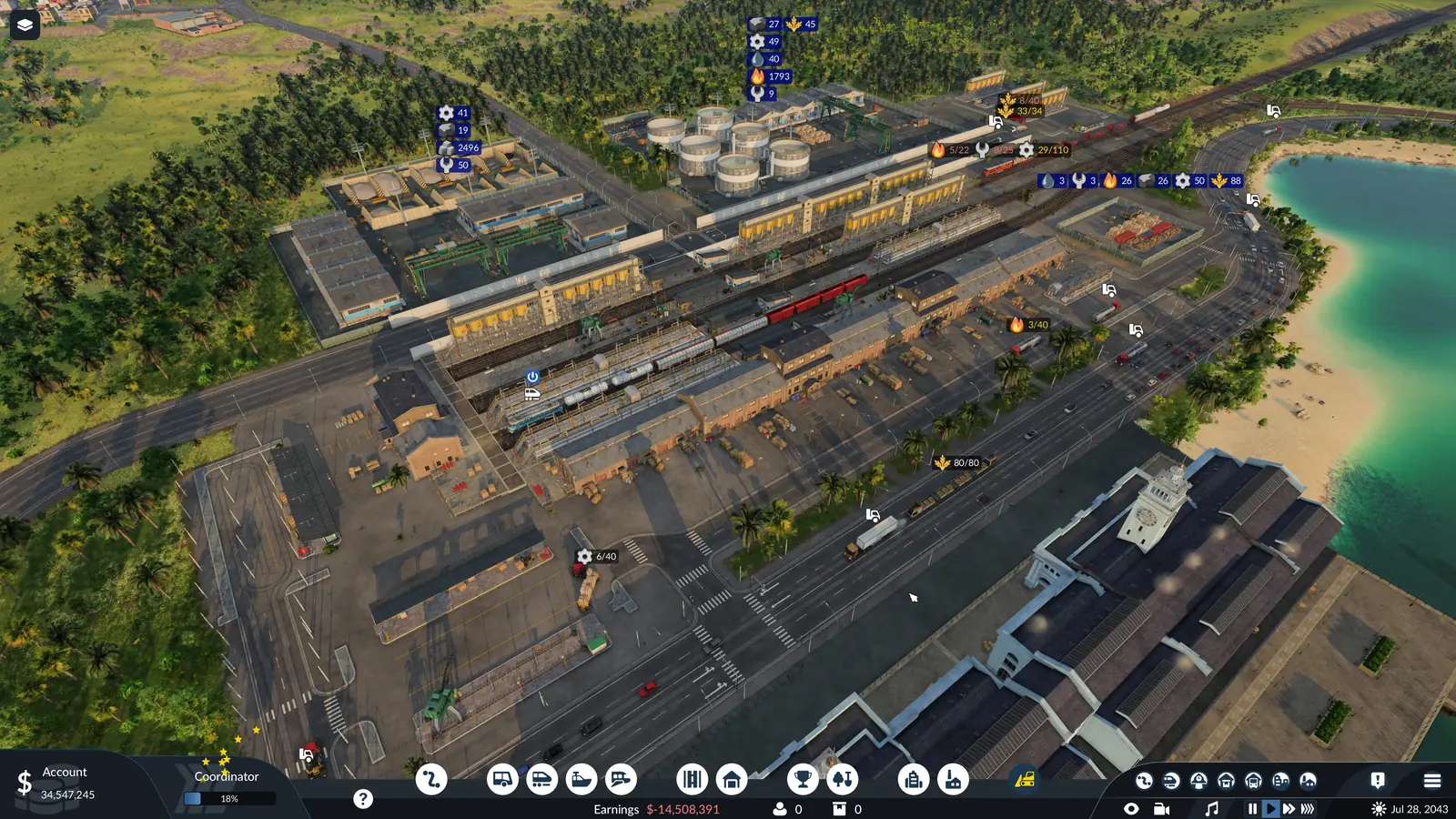
- Does anything at the harbor take fish? A vehicle unloads a cargo at each stop where something takes that cargo: an industry that uses it, a town district that asks for it, or a warehouse set up to store it. For fish, that is a town's commercial district, a Canning Factory, or a warehouse with room for fish. For cargo, the industry, town building or warehouse only has to be inside the station's catchment radius. Unlike passengers, cargo needs no path to the station. Select the station (or start placing one) and everything inside its catchment area is tinted: blue where cargo can move to or from the station, green for passengers, white for both.
- Does the town want fish? While you place a station, small cargo icons above town districts and industries show which cargo each of them takes or supplies. Every building in a town's commercial and industrial districts wants cargo; its window shows which cargo and how well it is supplied.
- Is fish picked in the harbor's stop settings? Unloading happens on its own. A stop's settings only control which cargo is loaded there, and up to what share of the vehicle. Ships that will not drop their fish often have fish picked in the stop settings of the harbor at the far end. Clear it there, and the fish comes off.
- Is the warehouse set up for fish? Fish is in the Goods group, so it needs a Goods module or universal storage. Each specialized module holds one cargo type at a time, so two cargo types from the same group need two modules: crude oil and fuel are both Liquid, yet need one module each. You pick the cargo by clicking its icon in the warehouse's Stocks list.
- Can the ship use that landing? Harbors have landing areas in two sizes, and a large ship can only stop at a large one.
- Does the ship reach the harbor at all? When a vehicle cannot reach a stop or a terminal, the line gets a problem icon in the line manager, and the warnings at the top of the screen list it. Changing tracks or signals can cause this later.
- Read the game's own warnings. The industry and warehouse statistics each have a Problems column with the game's warnings, and the industry statistics list the cargo every industry needs under Requirements.
What Urban Games says: Harbors, stations and the rest of your network no longer hold cargo. A ship only lets its fish go where the fish has somewhere to be: a factory, a buyer in town, or a warehouse built next to the harbor.
Urban Games' UG-Sam on Steam, in a reply the developers marked as the answer, September 29, 2026. Our summary, not a quote.
Other cargo stuck too? The cargo unloading guide shows where each of the game's cargo types can be dropped off.
A fish route from the fishing grounds to a town
- Find a buyer. For cargo, start small: carry food such as vegetables or fish to a town whose commercial district wants it. The town window, and the label next to the town's name, show what it is asking for. The other buyer is a Canning Factory.
- Build a harbor close to the buyer. Harbors can only go along the shore. They snap to the coastline by themselves; hold Shift while you place one to stop the snapping. A new harbor has three parts: the landing area, which must sit in navigable water; the harbor building and its pier, which can stand partly on land and partly over water; and the street access, which must be on solid ground. The manual lists a single harbor type, the Passenger and Cargo Harbor, available from 1900.
- Add a warehouse if the buyer is out of reach. If the town's commercial district or the factory is not inside the harbor's catchment area, place a warehouse next to the harbor. A warehouse stores cargo and passes it between different kinds of transport. It needs no road access: any station whose catchment radius covers it can load from it and unload into it. A universal warehouse stores any mix of cargo and is the cheaper choice.
- Buy the ships. Ships are bought at a shipyard. Depots and shipyards are the only places that sell vehicles. A shipyard has to stand near navigable water, and a ship you buy for a line needs a way through navigable water from that shipyard to the line's first stop.
- Make the ship line. Whatever an industry makes stays there until a vehicle collects it, and only a vehicle that can carry it, on a line set to load that cargo at a stop at or close to the industry, will. So set fish to load at the stop by the fishing grounds, and leave the harbor stop empty. Run the fish ships from the fishing grounds to a harbor on the shore, and send passenger ships from that harbor out to the fishing grounds to bring workers.
- Carry the fish on. If the fish goes into a warehouse, add a truck cargo station whose catchment area covers the warehouse and another one by the town's commercial district, then a truck line between them that loads fish at the warehouse.
- Watch the clock. Every cargo type has its own expected delivery time, which the Delivery Time tab of the finances window shows. It is new in Transport Fever 3. Cargo that arrives late still pays in full, but it lowers the town's on-time delivery rating, which slows the town's growth. A specialized module (Liquid, Bulk, Flatbed or Goods) loads and unloads faster, and cargo kept in it stops aging: its delivery timer is frozen.
Ships, harbor sizes and shipyards in more detail: the ships and harbors guide.
Where fish comes from
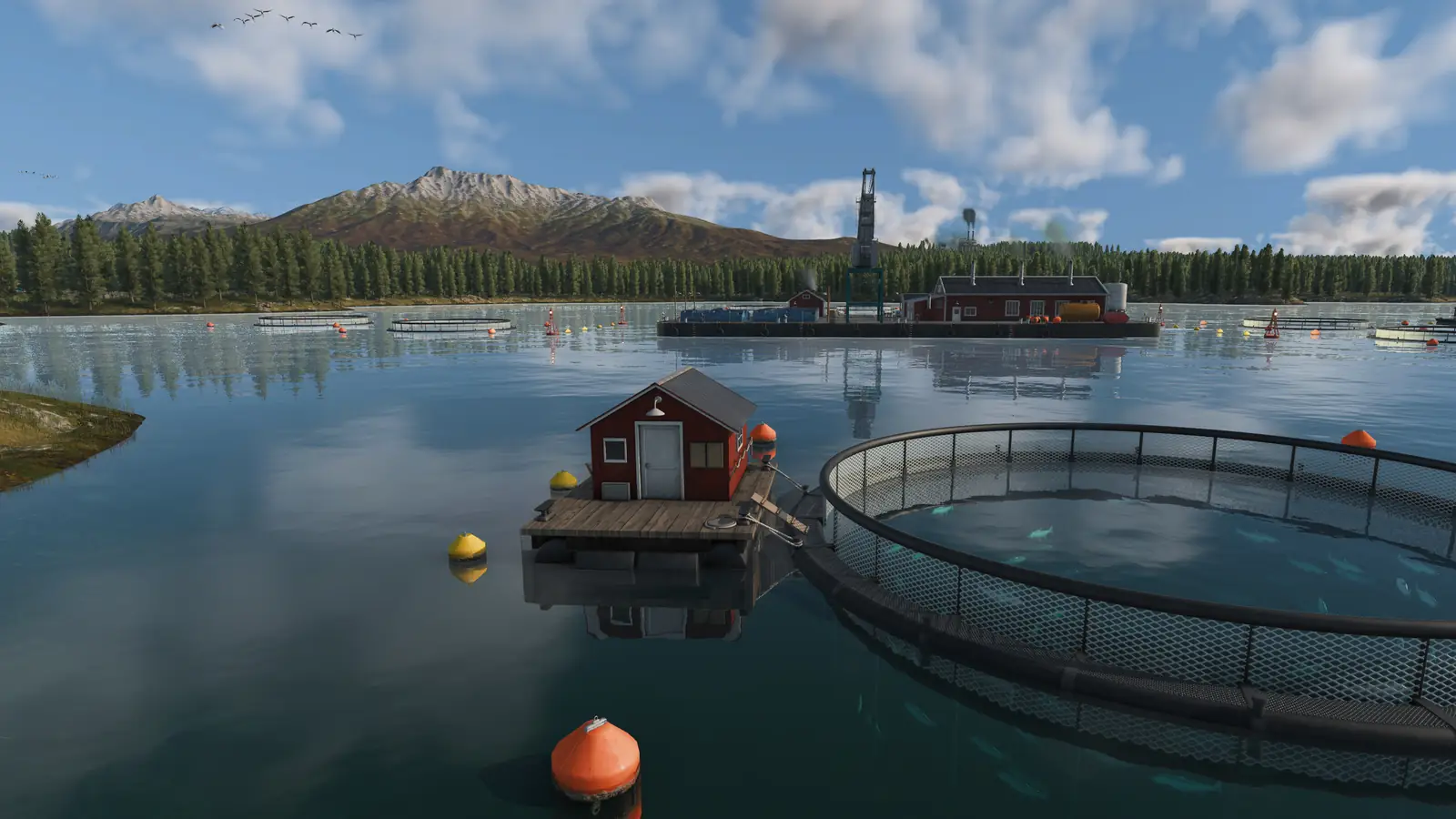
Fish is a raw material in the Goods group, and only one industry makes it: Fishing Grounds. The manual's industries table lists them for Temperate, Tropical, and Subarctic maps, not for Dry ones.
Fishing Grounds make 1–12 Fish. How much a raw industry makes depends on its plots: its fields, plantations, shafts and so on. Serve a raw industry well and it grows, adding plots on the land around it.
Urban Games' announcement of the industry system, from August 2025, before release, adds two things: some industries sit out at sea, so ships are the way to bring their goods ashore. Industrial sites come with stations built in, which makes the early game easier.
Getting more fish
Any industry can be boosted with workers. Give it a passenger connection, and once enough workers arrive often enough, it produces faster overall; if too few have come lately, the boost switches off. Fishing grounds sit in the water, so workers come by passenger ship; the workers guide covers the passenger line.
A raw industry can also run a booster on cargo. Deliver enough of its booster cargo and the booster starts, drawing items from the input stock until too few are left to keep it going. For Fishing Grounds that cargo is Tools, made by the Tool Factory. The industry guide covers every other reason an industry makes too little.
Prospecting for fish
No fishing grounds near the town you serve? Found some. A prospection sends an expedition to look for one type of resource inside a town's municipal area. If that resource is there, a new industry is founded. Start it inside the municipal area of the town where you want the new industry. It only succeeds if that area has the resource. For example, a fish prospection fails in an area without water.
The Perks tool in the toolbar is where you build landmarks, start prospections and give towns or industries the special bonuses. In an official pre-release screenshot, prospecting for fish comes with Mechanic, the rank after Junior, at a map population of 2,167. The company window shows what each rank unlocks.
Ranks, perks and the other prospections are in the prospecting and company ranks guide.
What fish is used for
- Towns. A town's commercial district buys fish, and the town window shows how well it is supplied.
- The Canning Factory. Its recipe is (2 Fish or 2 Meat) + 1 Sheet Metal → 2 Canned Food, so Meat can stand in for fish, but it always needs Sheet Metal from the Steel Mill. The manual's cargo table calls it the Food Factory. The canned food goes to a town's Commercial District.
Planning the whole chain? The production chain planner shows every industry in the canned food chain, with amounts.
What the manual does not say
- Whether fishing grounds have a landing of their own: the manual only says that cargo is collected at a stop at or close to the industry.
- How much fish a town's commercial district wants, beyond what the town window shows in your game.
- What a prospection costs, for fish or any other prospection.
- How long the expedition takes, for fish or any other prospection.
- Whether the same prospection can be started again, and how soon, for fish or any other prospection.
Frequently asked questions
Why won't my fish unload in Transport Fever 3?
Because nothing at the harbor takes it. Cargo waits inside industries and warehouses. A station holds no cargo; only passengers wait at its platforms. A vehicle unloads a cargo at each stop where something takes that cargo: an industry that uses it, a town district that asks for it, or a warehouse set up to store it. For fish that means a town's Commercial District or a Canning Factory inside the harbor's catchment area, or a warehouse with Goods or universal storage. Unloading happens on its own. A stop's settings only control which cargo is loaded there, and up to what share of the vehicle.
Do you need a warehouse for fish?
Only when nothing that takes fish is inside the harbor's catchment area. A warehouse stores cargo and passes it between different kinds of transport. It needs no road access: any station whose catchment radius covers it can load from it and unload into it. Towns and factories cannot help themselves to what a warehouse holds. A vehicle has to carry the cargo on to them. So a truck or train line has to load the fish at the warehouse and carry it on to the town or the Canning Factory.
What is fish used for in Transport Fever 3?
Towns buy it for their Commercial District, and the Canning Factory turns it into canned food: (2 Fish or 2 Meat) + 1 Sheet Metal → 2 Canned Food. The manual's cargo table calls that factory the Food Factory. Canned food is bought by a town's Commercial District.
Where do you find fish in Transport Fever 3?
Fish comes only from Fishing Grounds, which the manual lists for Temperate, Tropical, and Subarctic maps but not for Dry ones. Some industries sit out at sea, so ships are the way to bring their goods ashore. To found new fishing grounds near a town, start a prospection for fish: it sends an expedition to look for one type of resource inside a town's municipal area. If that resource is there, a new industry is founded. For example, a fish prospection fails in an area without water.
When do you unlock prospecting for fish?
The company window lists what each rank unlocks. In an official pre-release screenshot, prospecting for fish comes with Mechanic, the rank after Junior, at a map population of 2,167.
Which warehouse module does fish need?
Fish is in the Goods group, so a warehouse stores it in a Goods module or as universal storage. A specialized module (Liquid, Bulk, Flatbed or Goods) loads and unloads faster, and cargo kept in it stops aging: its delivery timer is frozen. Each specialized module holds one cargo type at a time, so two cargo types from the same group need two modules: crude oil and fuel are both Liquid, yet need one module each. You pick the cargo by clicking its icon in the warehouse's Stocks list.
How do you get more fish from fishing grounds?
Any industry can be boosted with workers. Give it a passenger connection, and once enough workers arrive often enough, it produces faster overall; if too few have come lately, the boost switches off. A raw industry can also run a booster on cargo. Deliver enough of its booster cargo and the booster starts, drawing items from the input stock until too few are left to keep it going. For Fishing Grounds the booster cargo is Tools, made by the Tool Factory.
Sources
The rules on this page come from the official Transport Fever 3 manual:
- Industries and Cargo (Fishing Grounds, the Canning Factory, fish and its makers and users, plots and boosters; revised September 28, 2026)
- Stations and Depots (where cargo is stored, catchment areas, harbors, landings and shipyards; revised September 29, 2026)
- Lines and Vehicles (when cargo unloads, stop settings and line problems; revised September 29, 2026)
- Warehouses (universal and specialized warehouses; revised September 29, 2026)
- Finances (prospections and the Delivery Time tab; revised September 29, 2026)
- Tips and Tricks (fish as a first cargo; revised September 29, 2026)
Also used:
- Why can't I unload fish? (Steam discussion; the reply the developers marked as the answer, by Urban Games' UG-Sam on September 29, 2026)
- Urban Games' industries and cargo announcement (August 28, 2025, before release)
Checked on October 19, 2026. Seen something different in game? Let us know.