Skip to content
Transport Fever 3 ToolsUnofficial fan toolkit
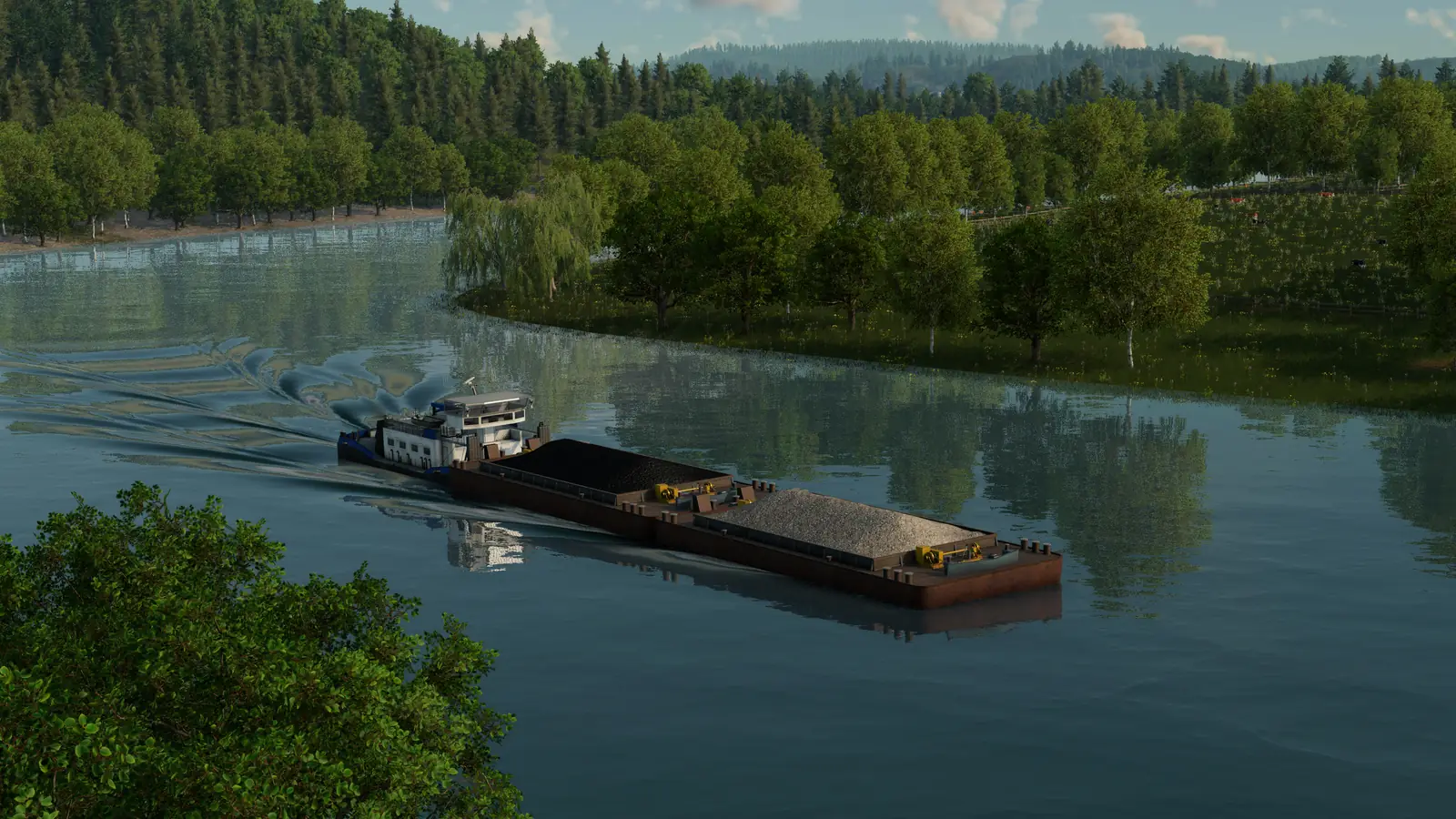
A cargo barge loaded with bulk goods sailing down a forested river in Transport Fever 3
Screenshot: Transport Fever 3 © Urban Games

Calculator

Transport Fever 3 Production Chain Planner

Choose a cargo, how much of it you want and your map's climate. The planner follows the official production rules back to raw materials and shows every industry involved, how many production runs each one needs and what is left over.

Last updated Game version: Release version, manual revised 2026-09-28

Climate zone
Wool comes from

Quick pick: end products

10 Clothes in a Temperate map

Complete chain

Amounts come from the manual's production ratios and are rounded up to whole production runs. The manual does not say how long a run takes or how much an industry makes per year, so this is not a yearly rate or a count of factories.

Production line

  • Raw Material
  • Intermediate Product
  • Booster Product
  • End Product
  1. Raw materials

    • 16Wool
      • from Cotton Farmoutput 1–12, varies with plots · booster: Fertilizer
    • 24Crude Oil
      • from Oil Platformoutput 1–4, varies with plots · booster: Tools
      • from Oil Welloutput 1–6, varies with plots · booster: Machines
  2. Stage 1

    • Oil Refinery× 6 runs

      Each run: 4 Crude Oil → 2 Fuel + 1 Fertilizer + 4 Chemicals

      Uses

      24Crude Oil

      Makes

      12Fuel(by-product)6Fertilizer(by-product)24Chemicals
    • Weaving Mill× 4 runs

      Each run: 4 Wool → 4 Fabric

      Uses

      16Wool

      Makes

      16Fabric
  3. Stage 2

    • Each run: 6 Chemicals → 2 Dyes + 5 Plastic

      Uses

      24Chemicals

      Makes

      8Dyes20Plastic(by-product)
  4. Final product

    • Each run: 4 Fabric + 2 Dyes → 3 Clothes

      Uses

      16Fabric8Dyes

      Makes

      12Clothes(2 extra)

Extra cargo

Left over from rounding up to whole runs and from industries that make more than one cargo. If nothing picks it up, the industry keeps producing and destroys what no longer fits in its output storage.

  • 2Clothes
  • 20Plastic
  • 12Fuel
  • 6Fertilizer

Chain overview

  • Clothes ← Textile Factory
    • Fabric ← Weaving Mill
      • Wool ← Cotton Farm (raw material)
    • Dyes ← Chemical Plant
      • Chemicals ← Oil Refinery
        • Crude Oil ← Oil Platform or Oil Well (raw material)

Share this plan: the link opens the planner with these exact settings.

Who makes Clothes

Who uses Clothes

  • Commercial District · town demand

How the planner calculates a chain

Every processing industry turns a fixed set of input cargo into output cargo in one production run. The planner divides the amount you ask for by the output of one run, rounds up to whole runs, and multiplies the inputs by that number. It then does the same for each input until it reaches raw materials.

Some industries make more than one cargo at once: Chemical Plant, Livestock Farm, Oil Refinery, Saw Mill, and Steel Mill. Each of them runs only as often as its most demanded output needs, and everything else it makes is listed as extra cargo. That way an industry that appears in two branches of a chain is counted once, not twice.

Raw industries (mines, pits, most farms, the Logging Camp and others) need no input. The manual gives their output as a range, for example 1–16 Coal for a Coal Mine, because it depends on how many plots (fields, mine shafts and so on) the industry has. The planner shows that range rather than inventing a fixed number.

Climate zones and missing links

Not every industry appears in every climate. When an industry in the chain is not listed for the climate you picked, the planner names the missing cargo, says where its producer does appear and offers the climates where the whole chain can be finished.

Where the game offers two routes, you choose: the Canning Factory takes either Fish or Meat, and Wool comes from either a Cotton Farm or a Livestock Farm. The choices appear under the settings as soon as they matter for your plan.

What the planner does not include

  • Time and yearly output. The manual only gives the ratio of a single run. It does not say how long a run takes or how much an industry produces per year, so the planner cannot tell you how many factories you need.
  • Boosters. Delivering Fertilizer, Machines, or Tools to a raw industry, or bringing workers by passenger line, raises output but is optional. Boosters are listed next to each raw industry instead of being added to the totals.
  • Campaign cargo. Covers free game mode only. Campaign missions can add special cargo and industries that the manual leaves out.

Related

For every industry's inputs, outputs and climates on one page, see Transport Fever 3 Industries and Cargo Types. The production rules come from the official game manual (page revised September 28, 2026, checked October 5, 2026).